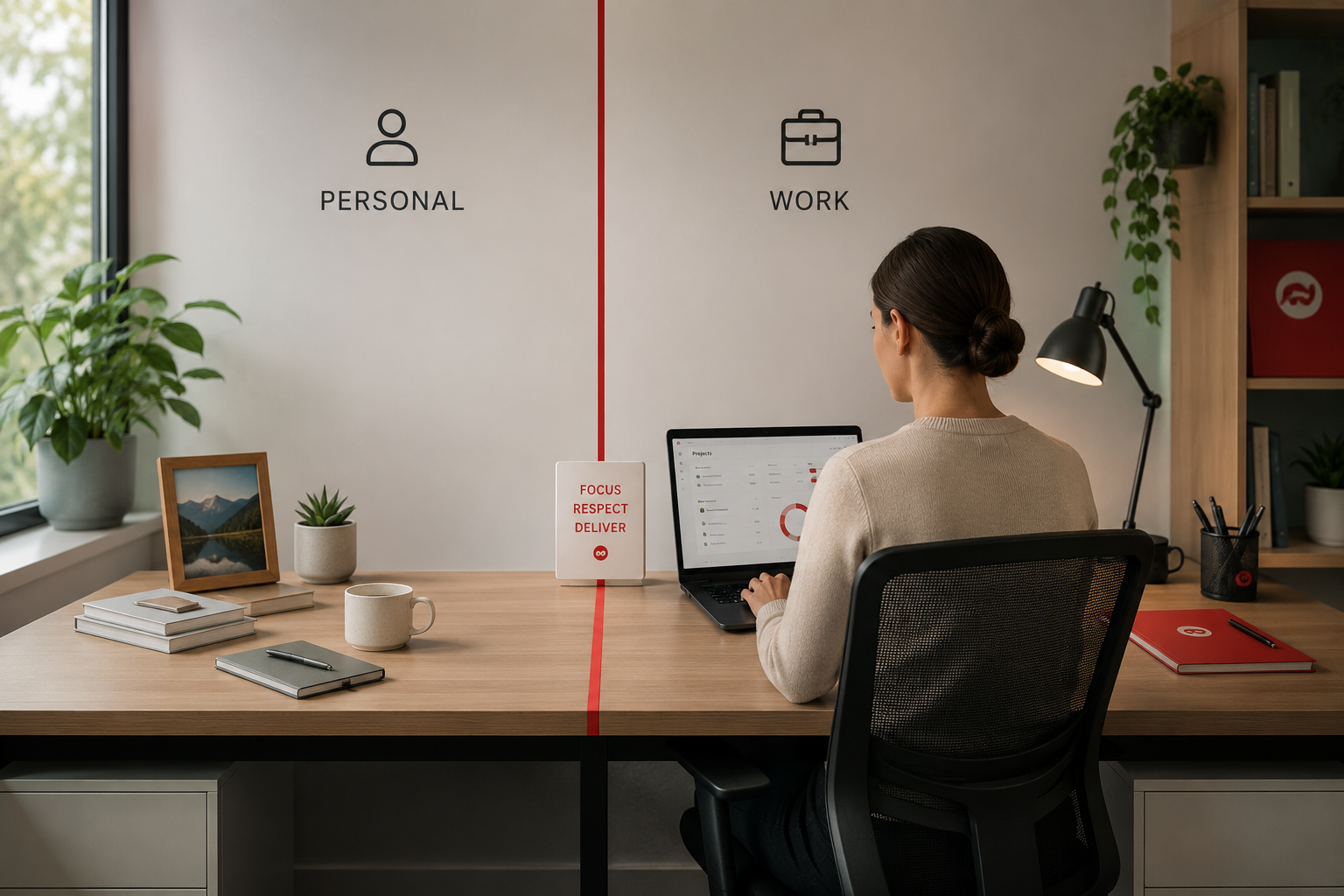
When you start or run a small business, especially a lean one, blending your personal and business life is almost automatic. You use your personal email for business messages because it is already there. You run everything from your personal phone. You reuse the same logins you use everywhere else. It is efficient, it is familiar, and it feels harmless. But that blending, convenient as it is, quietly multiplies your security risk and blurs the line around what needs protecting. Untangling it is one of the more overlooked upgrades a small business can make.
This is not about buying a pile of separate services or making your life more complicated. It is about drawing a few sensible lines between your business and your personal digital life, so a problem on one side does not automatically become a problem on the other. Let me explain why it matters and how to start, simply.
Why mixing the two creates risk
The core problem is that when everything is blended, a weakness anywhere becomes a weakness everywhere. Your business and personal exposure merge into one, and the whole is more vulnerable than either would be alone.
Consider the personal email running your business. That personal account was probably created years ago, may use an old or reused password, and might already have appeared in a data breach somewhere. Now it is also the hub of your business, holding client messages, invoices, and the recovery path to your business accounts. A weakness in a casual personal account has become a weakness in your business. The same goes for reused passwords: the login you use for your business is the same one you used on some forgotten website that got breached, so a leak over there hands a criminal the keys to your business over here.
There is a practical and professional dimension too. Mixing accounts makes it harder to know what is business and what is personal, harder to protect the right things, harder to hand off or separate later, and messier if you ever bring on staff, sell the business, or simply want to step away without your personal life being tangled into the company. Blended is not just riskier. It is harder to manage.
Where to draw the lines
You do not have to overhaul everything at once. A few key separations deliver most of the benefit. Start with these.
- Use a real business email, not your personal one. This is the big one. Set up proper business email on your own domain, your name at your business, rather than running the company from a personal account. It is more professional, it lets you protect and manage it properly, it keeps business messages separate from personal ones, and it means your business does not live inside a casual account you set up long ago. This single change improves both your security and your credibility.
- Keep business and personal passwords and logins separate, and never reused. Your business accounts should have their own strong, unique passwords, not the ones you use for personal sites. A password manager makes this effortless and is the natural tool for keeping the two worlds distinct.
- Separate your finances. Keep business banking and payments in dedicated business accounts, not run through personal ones. This matters for security, for cleaner records, and for protecting your personal finances from business risk. It is also just good business practice your accountant will thank you for.
- Be intentional about devices. Ideally, business work happens on protected devices set up for it. If you do use a personal phone or computer for business, which many small owners reasonably do, at least make sure it is properly secured, strong locks, updated, protected, with the ability to separate or remove business access, so business data on a personal device is not sitting unprotected.
- Separate accounts as you grow. As you add tools, services, and eventually staff, set them up under the business, with business accounts and access, rather than tying them to your personal identity. It keeps things manageable and secure as the company grows, and saves painful untangling later.
Keeping it practical
The goal is sensible separation, not rigid inconvenience. For a very small or brand-new business, you may reasonably share some devices or ease into this over time, and that is fine. The important thing is to move in the right direction: get a proper business email, stop reusing personal passwords for business, separate your banking, and secure whatever devices you use. Even partial separation meaningfully reduces your risk and makes your business easier to protect and to manage. You can tighten it further as the business grows.
How we think about it
Drawing clean lines around what belongs to the business is part of protecting it well, which fits how we think about security at Red Door Shield, through a simple framework we call KIT: Keep, Inspect, Trust. Keep what is valuable secure, which is far easier when business systems and data are distinct from your personal life and can be protected as their own thing. Inspect what is coming in, which is clearer when business and personal are not tangled together. And trust through validation, with the separate, well-secured accounts and access that keep a weakness on one side from spilling to the other. We help you set up your business on its own secure footing, so it is protected, manageable, and ready to grow.
What ready looks like
Picture your business standing on its own clean footing: a proper business email you control and protect, business logins that share nothing with your personal accounts, dedicated business banking, and secured devices for your work. A breach of some old personal account no longer threatens your company, and your business is easy to protect, hand off, or grow because it is not tangled up with your personal life.
That is what ready feels like. Not running your company through the same casual accounts you use for everything else, but giving your business the distinct, protected foundation it deserves.
Blending personal and business is natural at the start, but as your business becomes real, so should the lines around it. The separations are straightforward and each one reduces your risk while making the business easier to run. If you want help setting your business up on its own secure foundation, from proper business email to protected accounts and devices, that is a conversation worth having today.
Learn about securing your business email, read about why password managers are safe, or see our guide on protecting your mobile devices.
Know Where Your Business Stands
Our free Business Security Assessment gives you a clear picture of your current security posture in less than 10 minutes. No technical knowledge required.
Not sure where your business actually stands?
Take our free Business Security Assessment. In under 10 minutes, you will know exactly where your gaps are and what it would take to close them.
Get My Free Security Assessment