If you run a restaurant or a retail shop, your business has a feature criminals love: card payments flowing through it all day long. Every swipe, tap, and order is a transaction, and where payments move in volume, attackers follow. Add in the customer Wi-Fi, the point-of-sale system, the seasonal and part-time staff, and the steady rhythm of a busy floor, and you have an environment with more open doors than most owners realize.
This is not a reason to lie awake. It is a reason to understand where your specific risks are, because restaurants and retail face a particular set of them, different from an office-based business. The good news is that protecting your shop comes down to a handful of focused steps centered on the things that make you a target: your payments and the systems around them. Let me walk you through it.
Why restaurants and retail are prime targets
Two things put these businesses squarely in attackers' sights, and they are baked into how the business runs.
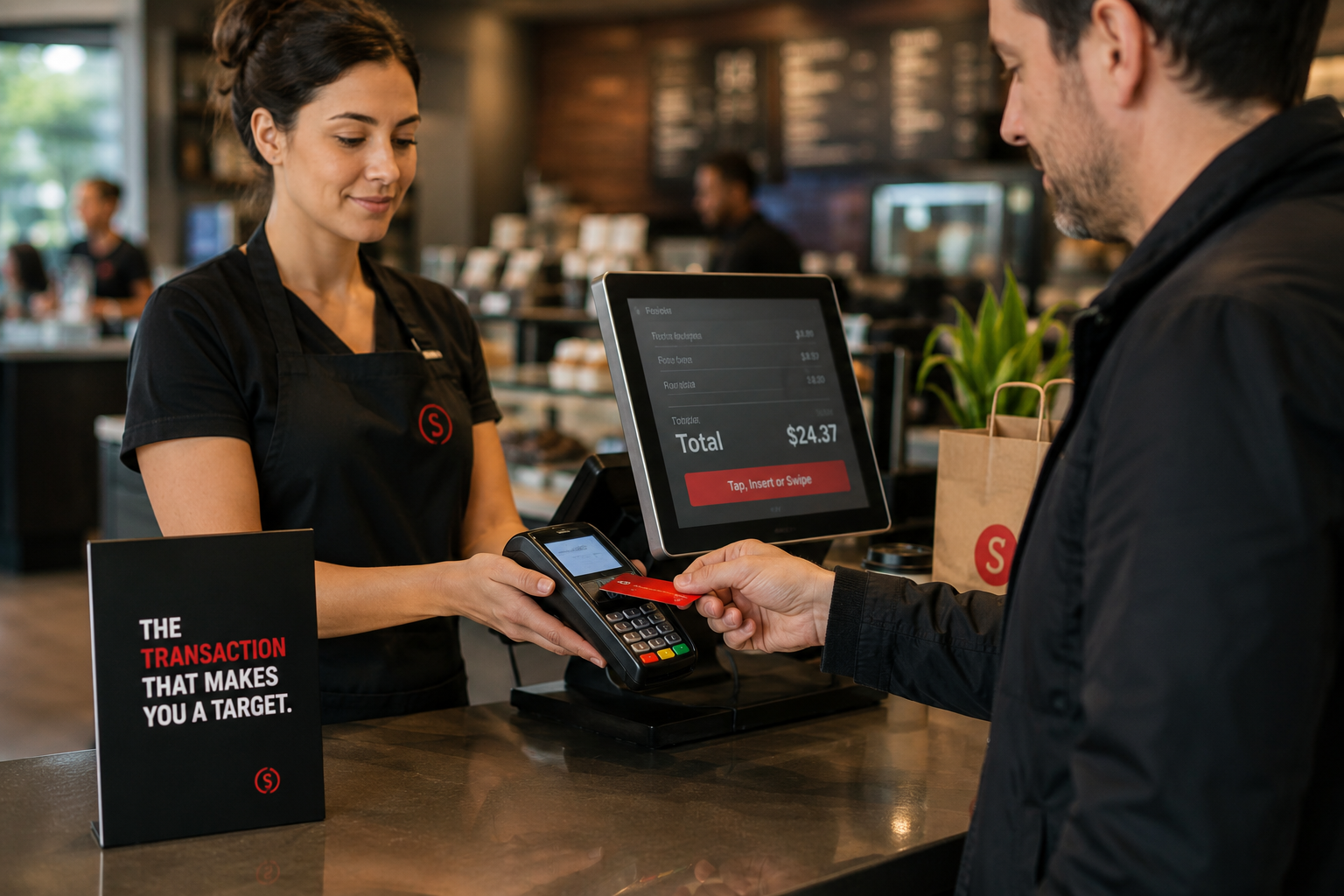
The first is payment volume. You process a lot of card transactions, which means a lot of valuable card data passes through your systems every day. Criminals specifically target the point-of-sale environment because compromising it can give them access to a steady stream of customer payment information. A breach of a busy shop's payment system can expose a remarkable number of customers quickly.
The second is the operating environment. Restaurants and retail tend to have public-facing Wi-Fi, multiple devices and terminals, high staff turnover with seasonal and part-time workers, and a fast-paced floor where security is understandably not the first thing on anyone's mind. Each of those is a normal part of the business, and each one is also a potential opening. Busy, public, payment-heavy, and staffed by a rotating team is, to an attacker, an attractive combination.
And the cost of a breach here is steep: the direct fallout, the penalties tied to mishandling card data, and the trust damage when customers learn their card was compromised at your business, in an industry that lives and dies on reputation and repeat visits.
Where the risks actually are
A few specific weak points come up again and again in restaurants and retail. Knowing them tells you exactly where to focus.
- The point-of-sale system itself is the crown jewel. If it is outdated, unpatched, or poorly secured, it is the most direct route to customer card data. Older POS setups and any that store card information are particular risks.
- The network is the next one. When your payment systems share a network with public customer Wi-Fi, or with other devices, a weakness anywhere on that network can become a path to your payments. Mixing customer Wi-Fi and payment systems on one flat network is a common and serious mistake.
- The people are the third. With many staff, including seasonal and part-time workers, coming and going, access can sprawl and good habits can slip, and an untrained team is more likely to fall for a scam or mishandle data.
- And the everyday devices, the tablets, the back-office computer, the connected equipment, each add to the surface if left unprotected.
How to protect your shop
Focus your effort on the things that make you a target, and you cover most of the risk.
- Secure and update your point-of-sale system. Use a reputable, current POS, keep it updated, and favor systems that keep card data out of your hands through encryption, so there is less for an attacker to steal. Do not store card information you do not need.
- Separate your networks. This is one of the most important steps for a shop. Keep your payment systems on their own protected network, completely separate from the public customer Wi-Fi and ideally from other devices. That way, a customer's infected phone on your guest Wi-Fi cannot reach your payment system. Your router can usually create these separate networks.
- Lock down access and clean it up. Give staff access only to what their role needs, use individual logins where possible rather than one shared password everyone knows, and remove access promptly when seasonal or departing staff leave. With high turnover, this matters more than in most businesses.
- Protect the surrounding systems. Strong passwords and multi-factor authentication on your business email and back-office accounts, updated and protected devices, and tested backups so a ransomware attack cannot shut down your operation.
- Train your team simply and often. A quick, ongoing word about spotting scams and handling customer data carefully turns a rotating staff into a layer of defense rather than a weak point.
How we think about it
A busy, payment-heavy shop is exactly the kind of environment we built Red Door Shield to protect, organized around a simple framework we call KIT: Keep, Inspect, Trust. Keep what is valuable secure, which for a restaurant or retailer centers on the payment systems and customer data that make you a target, plus the backups that keep you running. Inspect what is coming in, with monitoring that watches your environment, including the network where payments and public Wi-Fi meet, so trouble is caught early. And trust through validation, with the access controls and separated networks that keep one weak point from reaching your payments. We help lock down the specific risks of a payment-driven business, so you can focus on serving customers, not worrying about your POS.
What ready looks like
Picture a busy day with payments flowing, customer Wi-Fi humming, and staff coming and going, and underneath it all, a payment system on its own protected network, access cleaned up as your team changes, devices secured, and backups ready. A customer asks if their card is safe with you, and the answer is genuinely yes. The thing that makes you a target is the thing you have locked down tightest.
That is what ready feels like for a shop. Not hoping the busy floor hides the gaps, but knowing the payments and systems your business runs on are protected.
Restaurants and retail are targeted because of what flows through them every day, which means protecting your payments and the systems around them is the heart of the job. The steps are focused and achievable. If you want help locking down your point of sale, separating your networks, and protecting customer data, that is a conversation worth having today.
Learn about protecting customer payment data, read about securing your Wi-Fi and router, or see our guide on employee offboarding access security.
Know Where Your Business Stands
Our free Business Security Assessment gives you a clear picture of your current security posture in less than 10 minutes. No technical knowledge required.
Not sure where your business actually stands?
Take our free Business Security Assessment. In under 10 minutes, you will know exactly where your gaps are and what it would take to close them.
Get My Free Security Assessment