If your business accepts credit or debit cards, and most do, then you are handling some of the most sensitive and most targeted information there is: your customers' payment details. And along with that comes a set of responsibilities that a lot of owners do not know they have, until something goes wrong or a form shows up from their payment processor asking questions they cannot answer.
This is not meant to alarm you. It is meant to make sure you are not caught off guard, because protecting card data is both an obligation and simply good business. The rules around it are more manageable than they sound, especially for a small business, once someone explains them plainly. So let me do that, without the jargon.
The thing most owners do not realize
Here is the part that surprises people. When you accept card payments, you are agreeing, often without fully realizing it, to follow a set of security standards designed to protect that card data. This is not a government law. It is a standard created by the major card companies, called PCI DSS, the Payment Card Industry Data Security Standard, and you are bound to it through your agreement with your payment processor and the card networks.
In plain terms: taking cards comes with strings attached. You are expected to handle and protect that payment data securely, and if you do not, you can face consequences, fees, penalties, higher processing costs, or liability if card data is stolen on your watch. Many owners have signed up for this without ever reading or understanding it. That is the gap this article closes.
The reassuring news is that for most small businesses, especially those using modern payment tools, meeting these expectations is quite achievable, and a lot of the heavy lifting can be handled for you.
Why card data is such a target
It helps to understand why this matters so much. Card data is essentially digital cash to a criminal. Stolen card numbers can be used or sold quickly, which is exactly why payment information is among the most aggressively hunted data there is. Businesses that process payments are therefore squarely in attackers' sights.
And the damage from a card data breach goes well beyond the data itself. There is the direct fallout, the fraud, the penalties, the cost of cleanup. But there is also the trust damage, which for many businesses is worse. Customers who learn their card was compromised at your business may never come back, and word travels. Protecting payment data is not just about avoiding fines. It is about protecting the customer relationship that your business depends on.
How to protect payment data (and yourself)
You do not need to become a payments security expert. You need to make a few smart choices and follow some sensible practices. Here is the practical version.
- The single best move for most small businesses is to not store card data yourself at all. The less card information your business holds, the less you can lose and the simpler your obligations become. Modern payment systems are designed so that card data flows straight to the processor without being stored on your devices. Use reputable, up-to-date payment tools that handle the sensitive data for you, and resist any habit of writing down or saving card numbers.
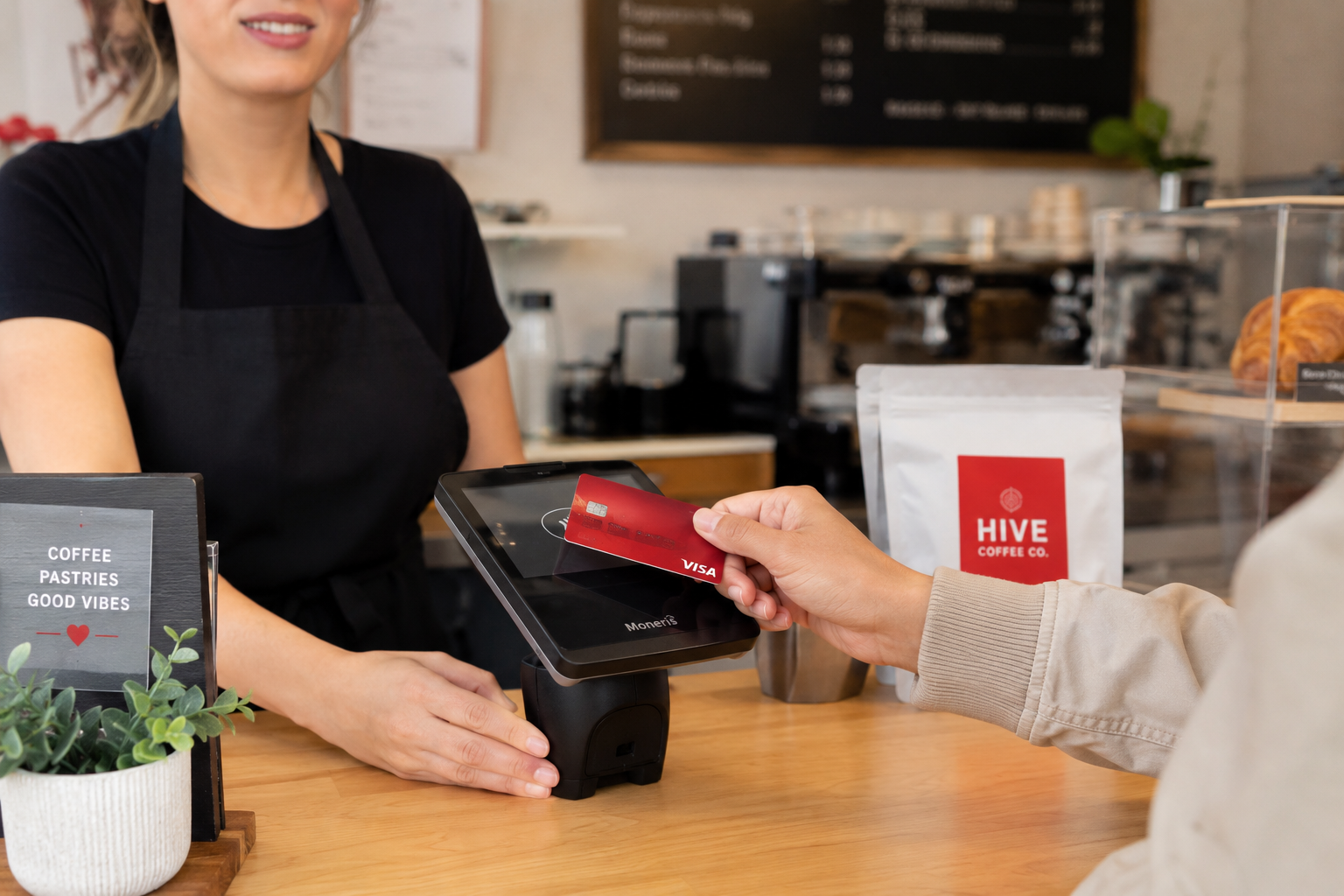
- Use trusted, current payment technology. Reputable payment providers and modern card readers build in strong protections like encryption, so the card data is scrambled and handled securely from the moment of the swipe or tap. Keep these systems and any related software updated.
- Protect the systems around your payments. The general security basics matter here too: strong, unique passwords and multi-factor authentication on your payment and business accounts, protected and updated devices, and a secure network, so attackers cannot reach your payment process through a side door. The router and network you secured, the accounts you locked down, all of it protects your payments too.
- Limit and watch access. Only the people who need to handle payments should have access to those systems, and you should be able to see who does. This is the same access-control thinking that protects everything else.
- Work with your processor on compliance. Your payment processor can tell you exactly what PCI compliance looks like for your specific setup, and they often provide tools, and sometimes simple questionnaires, to help you meet it. They are your first call for the specifics, because the requirements scale with how you take payments.
A quick, important caveat
The exact requirements that apply to you depend on how your business accepts payments and how much card data you handle, and the details can get technical. This article is a plain-English orientation, not a compliance certification. For your specific obligations, talk with your payment processor and, where appropriate, a qualified professional. What matters most is that you now know this responsibility exists, so you can ask the right questions instead of being surprised by them.
How we think about it
Protecting payment data sits naturally within how we approach security at Red Door Shield, through a simple framework we call KIT: Keep, Inspect, Trust. Keep what is valuable secure, and few things are more valuable or more targeted than customer card data, so the goal is to hold as little as possible and protect what you do. Inspect what is coming in, through the monitoring that helps catch threats aimed at your payment environment. And trust through validation, with the access controls and verification that keep your payment systems locked to the right people. We help secure the business systems and network your payments run through, working alongside your payment processor, so the whole environment around your transactions is protected, not just the card reader itself.
What ready looks like
Picture handling card payments with genuine confidence: using modern tools that keep card data out of your hands, with the systems and network around them locked down, knowing what your processor expects and being able to meet it. If a compliance questionnaire arrives, you have answers. If a customer asks whether their card is safe with you, you can say yes and mean it.
That is what ready feels like. Not hoping the payment side takes care of itself, but knowing the most targeted data your business touches is genuinely protected.
Accepting cards is part of doing business, and the responsibility that comes with it is manageable once you understand it. Hold as little card data as possible, use trusted modern tools, secure the systems around them, and lean on your processor for the specifics. If you want help making sure the business systems and network behind your payments are properly protected, that is a conversation worth having today.
Learn about cyber insurance requirements, read about Illinois BIPA compliance, or see the FTC Safeguards Rule.
Know Where Your Business Stands
Our free Business Security Assessment gives you a clear picture of your current security posture in less than 10 minutes. No technical knowledge required.
Not sure where your business actually stands?
Take our free Business Security Assessment. In under 10 minutes, you will know exactly where your gaps are and what it would take to close them.
Get My Free Security Assessment